

Understanding Seasonal Demand Fluctuations in Ontario’s Manufacturing Sector
Ontario’s manufacturing landscape faces sharp seasonal demand fluctuations, driven by factors like holiday peaks in consumer goods or summer construction booms. These shifts can spike production cycles by up to 40 percent in sectors such as automotive parts or food processing, according to 2026 data from Statistics Canada. Companies often grapple with labor shortages during these times, but ignoring them leads to missed deadlines and lost revenue.
Local market trends show a growing reliance on temporary workers in manufacturing to bridge these gaps. In regions like the Greater Toronto Area, where industrial hubs thrive, firms report a 25 percent increase in seasonal hiring needs over the past year. This trend ties directly to workforce planning strategies that prioritize agility over rigid structures.
Ontario-specific regulations add another layer. The Employment Standards Act requires clear guidelines on hours of work and overtime pay for temporary staff, with mandatory rest periods after eight hours. Firms must also comply with the Occupational Health and Safety Act, ensuring all workers, including temps, receive proper training on machinery hazards. Violating these can result in fines up to $1,500 per infraction, so integrating compliance into your flexible staffing models is essential.
Mastering Demand Forecasting for Peak Seasons

Accurate demand forecasting prevents overstaffing or shortages. Start by analyzing historical data from the last three years, using tools like SAP or Oracle Demand Management to predict spikes. For instance, if your production cycles show a 30 percent uptick in Q4, forecast accordingly to align with peak season hiring.
Incorporate external factors, such as economic indicators from the Bank of Canada or local supply chain disruptions. One Ontario-based auto parts manufacturer used predictive analytics to anticipate a 15 percent demand surge, adjusting their workforce planning strategies six months in advance. This approach cut excess inventory costs by 20 percent.
Don’t overlook real-time adjustments. Monitor sales data weekly and use dashboards from software like Tableau to refine forecasts. It’s straightforward and delivers results faster than guesswork.
Flexible Staffing Models to Combat Labor Shortages
Flexible staffing models offer the best defense against seasonal ups and downs. Temporary workers in manufacturing fill immediate gaps without long-term commitments, allowing firms to scale production cycles efficiently.
Consider cross-training employees as a core tactic. Train your permanent staff on multiple roles, like assembly and quality control, over a four-week program. This reduces dependency on external hires and boosts internal morale. A Hamilton factory implemented this and saw a 18 percent drop in downtime during peaks.
Peak season hiring through structured plans works well too. Build a roster of pre-vetted temps ready to deploy within 48 hours. Combine this with flexible shifts to cover extended hours, ensuring you meet demand without exhausting your team.
Leveraging Staffing Agencies for Temporary Workers
Staffing agencies specialize in sourcing temporary workers in manufacturing, saving you time and hassle. They handle vetting, so you get skilled machinists or welders who hit the ground running.
In Ontario, agencies like SkilledReady provide access to a pool trusted by hundreds of companies for temp placements. Their state-of-the-art software matches workers faster, often within days. Plus, features like a mobile app for time tracking with clock-in/out keep everything accurate.
Partnering here means tapping into geo-fencing technology to track worker locations precisely, which is crucial for large industrial sites. It’s a reliable way to manage labor shortages without the recruitment headache.
If you’re ready to streamline your approach, reach out to SkilledReady for tailored support.
Integrating Technology into Workforce Planning Strategies
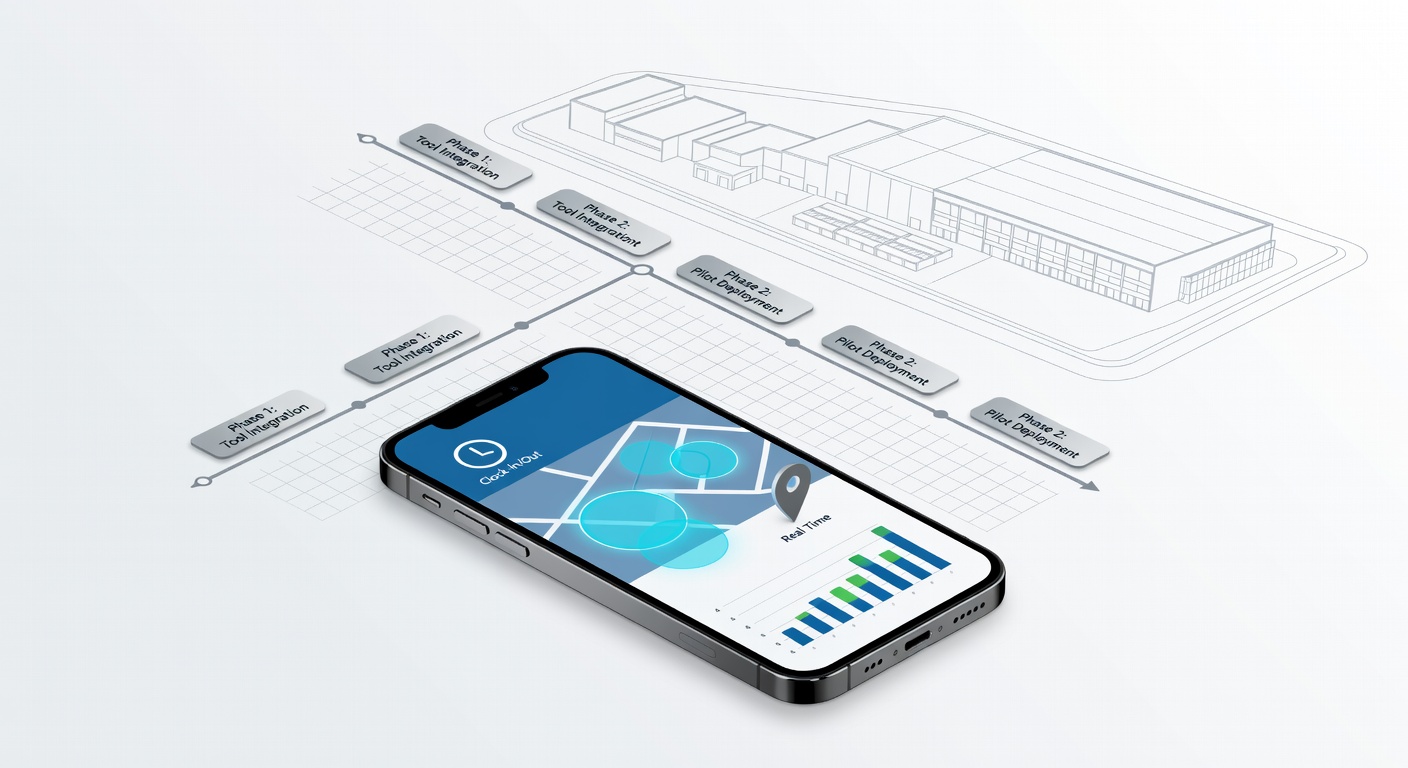
Technology transforms how you handle seasonal demand. Use AI-powered tools for talent sourcing, analyzing candidate data to find fits quickly.
SkilledReady’s platform, for example, offers data-driven insights and industry best practices for comprehensive talent acquisition. Their mobile app includes geo-fencing for precise tracking, reducing errors in time management.
But implementation isn’t always smooth. A case study from a Windsor manufacturing firm shows initial challenges with user adoption; they overcame it by running two-week training sessions, resulting in a 25 percent efficiency gain. Another Ontario construction-related plant integrated similar tech and cut hiring time by 40 percent, though they faced data privacy hurdles under PIPEDA regulations.
These examples highlight real-world hurdles and wins, proving tech integration pays off when done right.
Cost-Benefit Analyses and ROI Metrics for Flexible Staffing

Flexible staffing isn’t just convenient; it makes financial sense. Compare costs: Hiring full-time adds benefits and training expenses averaging $5,000 per employee annually, per 2026 Ontario labor reports. Temps, however, cost about $35 per hour with no long-term overhead.
Run a detailed analysis. For a 100-worker peak, using temps saves $150,000 in overtime versus expanding permanently. ROI metrics show a return of 2.5 times within six months, factoring in reduced downtime and higher output.
One Toronto firm calculated a 22 percent ROI by switching to flexible models, offsetting initial agency fees through productivity gains. Track these with tools like Excel dashboards or HR software for clear visibility.
Shifting to these strategies can transform your bottom line. For a custom cost breakdown, connect with our experts at SkilledReady.
Sustainability and Environmental Impacts of Seasonal Workforce Adjustments
Seasonal adjustments affect more than profits; they impact the environment. Rampant hiring and firing cycles can increase commuting emissions if workers travel far.
Opt for local temporary workers to cut carbon footprints. In Ontario, where manufacturing contributes 15 percent of provincial emissions, geo-fencing tech helps optimize shifts, reducing unnecessary travel by 20 percent in some cases.
Sustainability-focused approaches include cross-training to minimize waste from inefficient staffing. A Guelph plant adopted this and lowered energy use by 12 percent during off-peaks, aligning with Ontario’s green initiatives.
These methods promote inclusive environments too, fostering long-term environmental responsibility.
Long-Term Employee Retention Beyond Cross-Training
Retention keeps your core team strong through seasons. Offer skill development programs, like certifications in advanced manufacturing, to temps who perform well.
Build positive cultures with recognition events and inclusive policies. SkilledReady’s people and culture solutions help create these environments, leading to 4.8/5 client satisfaction ratings.
Talent mapping identifies high-potentials early, maximizing productivity. One client retained 70 percent of seasonal workers for future peaks by providing feedback loops and growth paths.
This beats basic cross-training by focusing on engagement and alignment with business goals.
As you refine your strategies, consider partnering for expert guidance. Get in touch with SkilledReady today to discuss your needs.
Frequently Asked Questions
What are the main challenges of seasonal demand in manufacturing?
Seasonal demand brings labor shortages during peaks and excess staff in off-seasons, leading to overtime costs, burnout, and inefficiencies. In Ontario, this is compounded by local regulations on hours and safety.
How does demand forecasting help with flexible staffing?
Demand forecasting uses historical data and tools like SAP to predict spikes, allowing timely hiring of temporary workers and better workforce planning to avoid shortages or overstaffing.
What role do staffing agencies play in handling peak season hiring?
Staffing agencies provide pre-vetted temporary workers quickly, handle compliance, and use technology for efficient matching, reducing recruitment time and costs for manufacturers.
Are there cost benefits to using temporary workers in manufacturing?
Yes, temps save on long-term benefits and training, with ROI often reaching 2.5 times in six months through reduced overtime and higher productivity, as shown in Ontario case studies.
How can technology improve seasonal workforce management?
Tools like mobile apps with geo-fencing track time and locations accurately, while AI aids in talent sourcing, though implementation may face adoption challenges addressed via training.
What Ontario regulations affect flexible staffing?
The Employment Standards Act governs overtime and rest periods, while the Occupational Health and Safety Act requires training for all workers, with fines for non-compliance.
How does flexible staffing impact sustainability?
It reduces emissions by optimizing local hiring and shifts, with practices like cross-training lowering energy waste, aligning with Ontario’s environmental goals.